The US Justice Department has shut down two longstanding porn sites known for hosting fake nudes depicting celebrities and politicians, as the country’s new anti-deepfake laws begin to bite harder.
On Friday (June 12, 2026), the Department announced that CFake.com and SOCFake.com had been seized under the Take It Down Act, which was signed into law in 2025 to criminalize non-consensual sexually explicit deepfake content.
Now if you try to access the sites you’re faced with an official notice declaring: “This domain has been seized”. Acting Attorney General Todd Blanche said that the shutdowns were a “significant victory in the fight against deepfake pornography”.
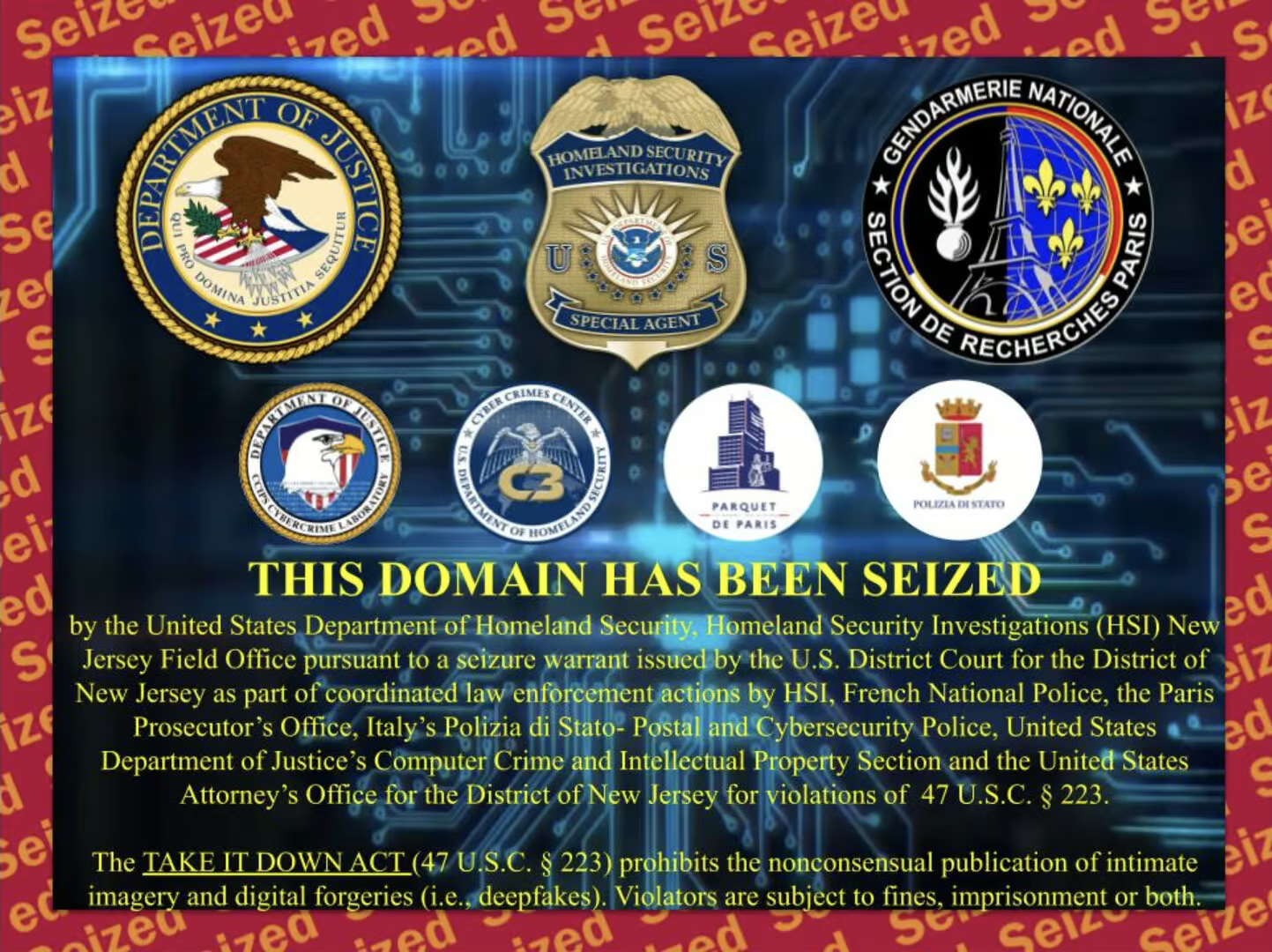
The Take It Down Act criminalizes the sharing of non-consensual deepfake porn in the US and requires platforms to remove flagged content within 48 hours. Earlier this month two men were arrested for allegedly making explicit deepfake content, in separate cases believed to be the first charges made under the Act.
The US isn’t alone in moving on this. The EU’s amended AI Act will ban nudify apps outright by December 2026, taking a more preventive approach that targets the creation tools rather than just the distribution. Between the two, a transatlantic enforcement picture is starting to take shape, though how effectively either side follows through remains very much an open question.
With those arrests being quickly followed by the website shutdowns, US authorities are attempting to show that they’re not messing around when implementing the deepfake crackdown. The Department said it worked with French authorities and that a man had been arrested in Nice, France, in relation to the shuttered sites. Cryptocurrency was also seized.
Speaking around the announcement of the CFake.com and SOCFake.com shutdowns, Robert Frazer, US Attorney for the District of New Jersey, said: “Those who use the internet to exploit others should not mistake online anonymity for immunity.”
Why these sites?
The CFake.com and SOCFake.com shutdowns are believed to be the first site takedowns implemented by the Justice Department under the Take It Down Act. Mr Deepfakes, a huge site hosting more sophisticated non-consensual deepfake porn, shut down shortly after the Act was passed into law. At the time a notice on Mr Deepfakes blamed “data loss” for the shutdown.
Unlike Mr Deepfakes, CFake.com and SOCFake.com weren’t known for hosting particularly sophisticated content. CFake.com is believed to date back to the 2000s, and was notorious for hosting fake nude images of celebrities created using photo manipulation software. Basically, people putting celebrity heads on porn performers’ bodies.
Federal investigators say the sites were hosting thousands of non-consensual fake nudes including sexual images depicting “famous women, including politicians, first ladies of multiple countries, royalty, journalists, television presenters, athletes, entertainers, and others.”
Sites like CFake.com, relying on retro photo manipulation rather than generative AI, were hardly at the cutting edge of the non-consensual deepfake problem. Their seizure is real enforcement, and victims of these sites deserve to see them gone. But it’s worth asking why the DOJ’s first site seizures targeted operations using technology that predates the current AI deepfake explosion, while apps generating far more sophisticated and harder-to-detect non-consensual content were accessible through Apple and Google’s own app stores, having racked up an estimated 700 million downloads.
Acting Attorney General Todd Blanche said: “The Department of Justice will vigorously enforce this law and deliver justice for victims.”
Support & help
If you’ve experienced image-based sexual abuse or non-consensual sharing of intimate images, help is available worldwide.
- USA — RAINN operates the 24/7 National Sexual Assault Hotline (800-656-HOPE), or visit the Cyber Civil Rights Initiative for comprehensive assistance.
- UK — Victim Support offers free help via a 24/7 helpline (0808 168 9111).
- Europe — many countries provide victim assistance through the 116 006 helpline.
- International — other resources include SaferNet (Brazil), Digital Rights Foundation (Pakistan), AWARE (Singapore), Rain Lily (Hong Kong), and KCSVRC (South Korea).
For a complete international directory, visit the Cyber Civil Rights Initiative’s international resources.
