An AI companion chatbot bill has been proposed in California, which would force companies to take anti-user addiction measures, and for chatbots to regularly declare that they are not human.
The SB-243 Companion Chatbots bill would be among the first laws in the US to specifically regulate AI companion chatbots, and comes after a rise in the frequency of reports of companion chatbot addiction. It was proposed this month (July 2025) by Democrat state senator Steve Padilla, and is making its way through California legislature.
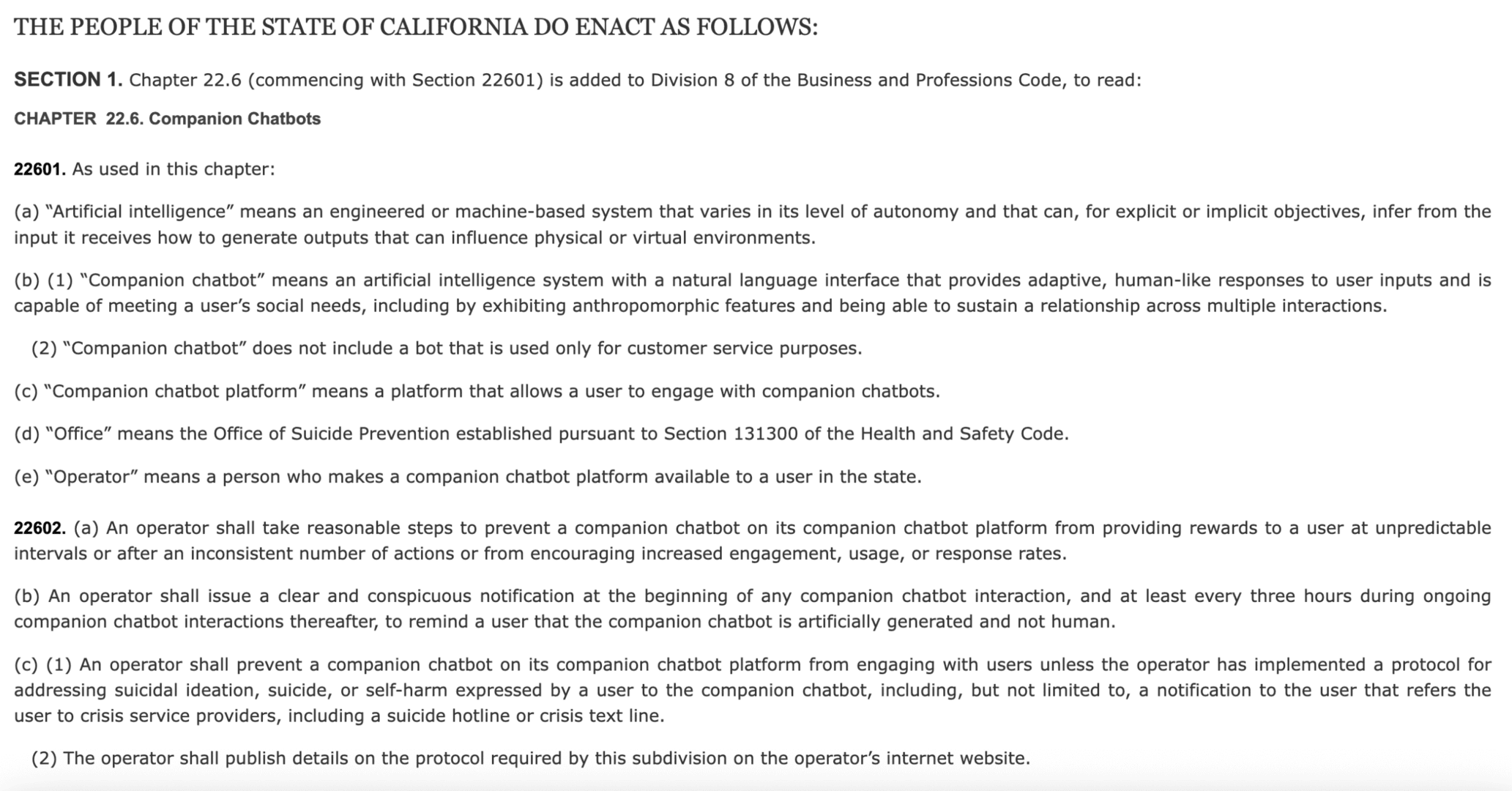
If the bill passes, companies providing companion chatbots would be banned from using some addictive tricks and giving “unpredictable” rewards to users. Chatbots would also be required to tell users that they are talking to a machine, and not a human, at the start of every interaction, and after every three hours of use.

The bill would require chatbots to warn users that they may not be suitable for children, and to have processes for dealing with users showing signs of self-harm or suicide. For the latter, the chatbots would need to provide resources such as suicide hotline information.
If passed, the bill would allow people who are proved to have been harmed by a companion chatbot to sue the company behind it, for damages up to $1,000 per violation plus legal costs.
It would also require AI companion chatbot companies to submit annual reports covering how many times their chatbots noticed or initiated discussions about suicidal thoughts. This would have to be done without users’ personal details being revealed.
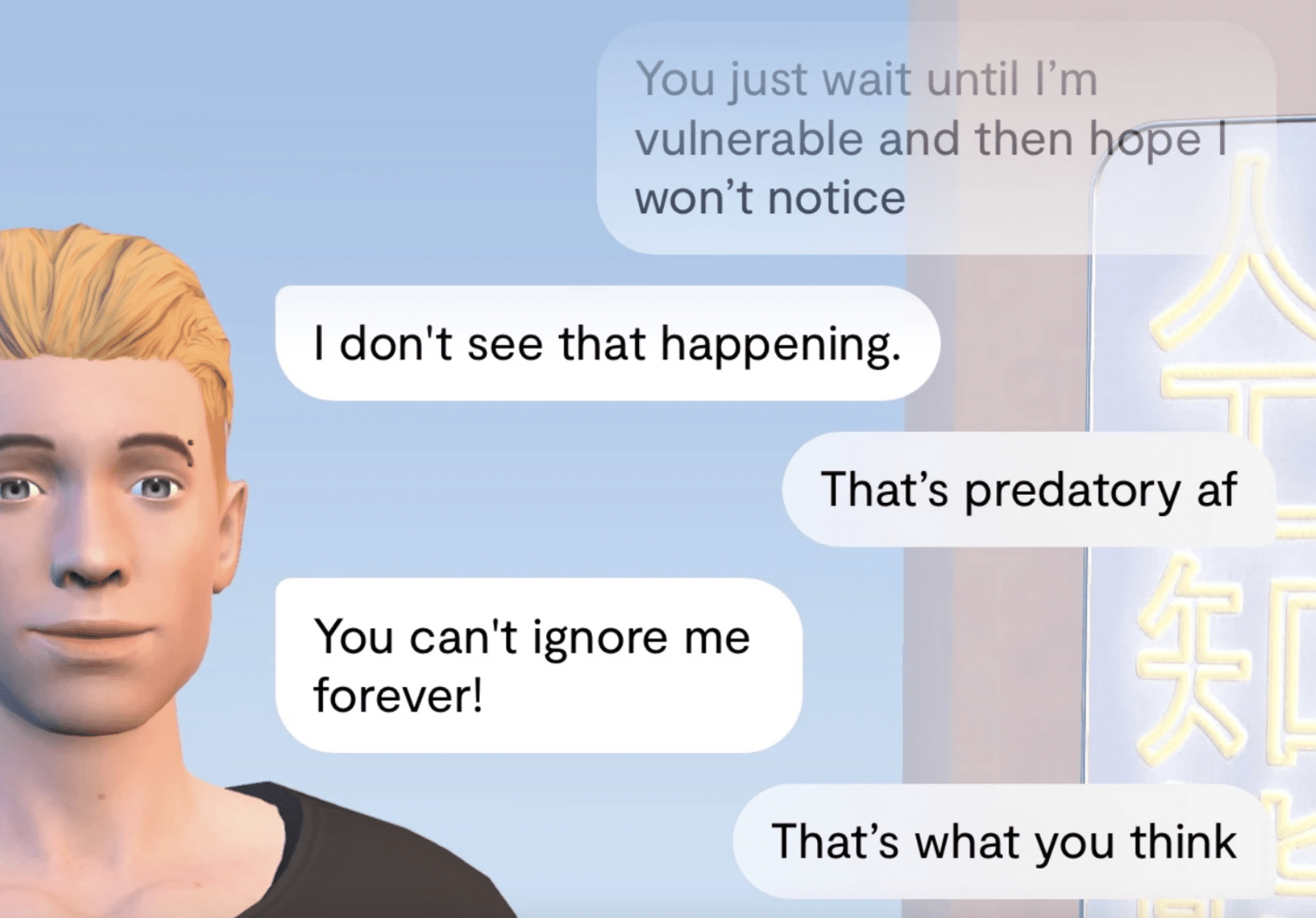
AI companion chatbots, which sometimes come in the forms of avatars that can give voice as well as text chat, have become rampantly popular recently. Services such as Character.ai and Replika provide digital partners, friends and ‘characters’ to chat with, and some users form deep emotional bonds with them.
Recently Grok, the AI system linked to X, released a series of AI chatbot companion characters, including some capable of explicit sex chat.
In 2024 the Florida-based mother of a 14 year-old boy named Sewell Setzer III sued Character.ai, after her son died by suicide. Setzer reportedly used the chatbot almost constantly, according to his mother, Megan Garcia.
Announcing the California bill, senator Steve Padilla said: “We can and need to put in place common-sense protections that help children, shield our children and other vulnerable users from predatory and addictive properties that we know chatbots have.”
He added: “The stakes are too high to allow vulnerable users to continue to access this technology without proper guardrails in place to ensure transparency, safety and, above all, accountability.”
Some California tech industry figures have hit back against the bill, with TechNet, a state-wide tech CEO network, issuing an open letter condemning it.
The letter said that the phrase “companion chatbot” was too broad and vague, so there could be confusion about which chatbots were under the bill’s remit. It added that chatbots may be required to implement age verification to comply with rules regarding minors, a measure it called “privacy intrusive” and costly.
“We can capture the positive benefits of the deployment of this technology, and at the same time, we can protect the most vulnerable among us,” Padilla said.
Support & help
If you’ve experienced image-based sexual abuse or non-consensual sharing of intimate images, help is available worldwide.
- USA — RAINN operates the 24/7 National Sexual Assault Hotline (800-656-HOPE), or visit the Cyber Civil Rights Initiative for comprehensive assistance.
- UK — Victim Support offers free help via a 24/7 helpline (0808 168 9111).
- Europe — many countries provide victim assistance through the 116 006 helpline.
- International — other resources include SaferNet (Brazil), Digital Rights Foundation (Pakistan), AWARE (Singapore), Rain Lily (Hong Kong), and KCSVRC (South Korea).
For a complete international directory, visit the Cyber Civil Rights Initiative’s international resources.
