Razer’s hologram AI companion, a humanoid figure that lives in a desktop jar-type device, is approaching its beta launch with a predictable mix of hype and criticism.
The Razer AVA is expected to be launched in the second half of 2026, billed as “Your always-on AI companion with agentic abilities”. It’s largely marketed as an AI gaming companion that perches on your gaming table in its jar, and gives you advice as you maneuver orcs around your screen or blast avatars or whatever. It can also manage your digital diary, in the way that general AI assistants do.
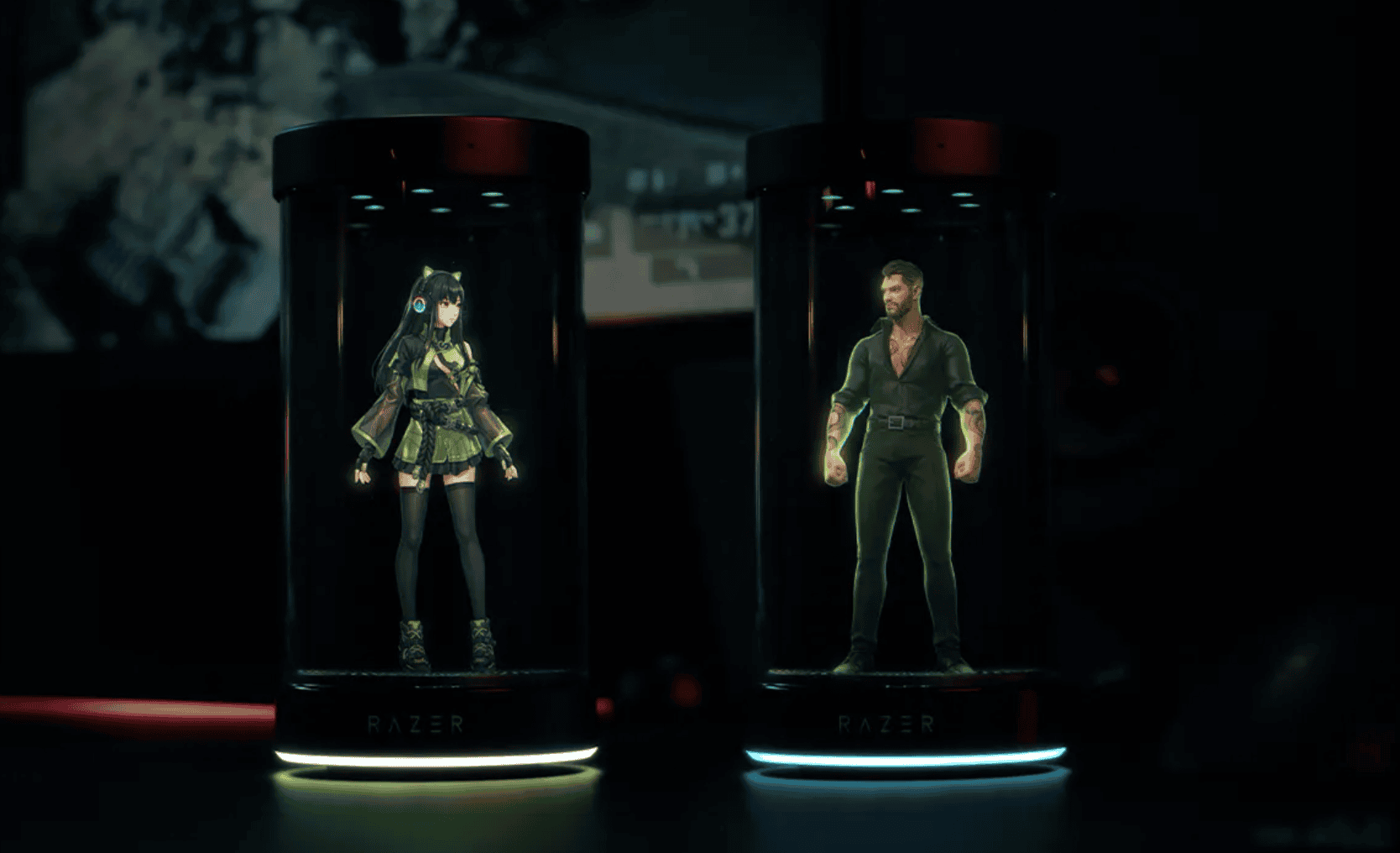
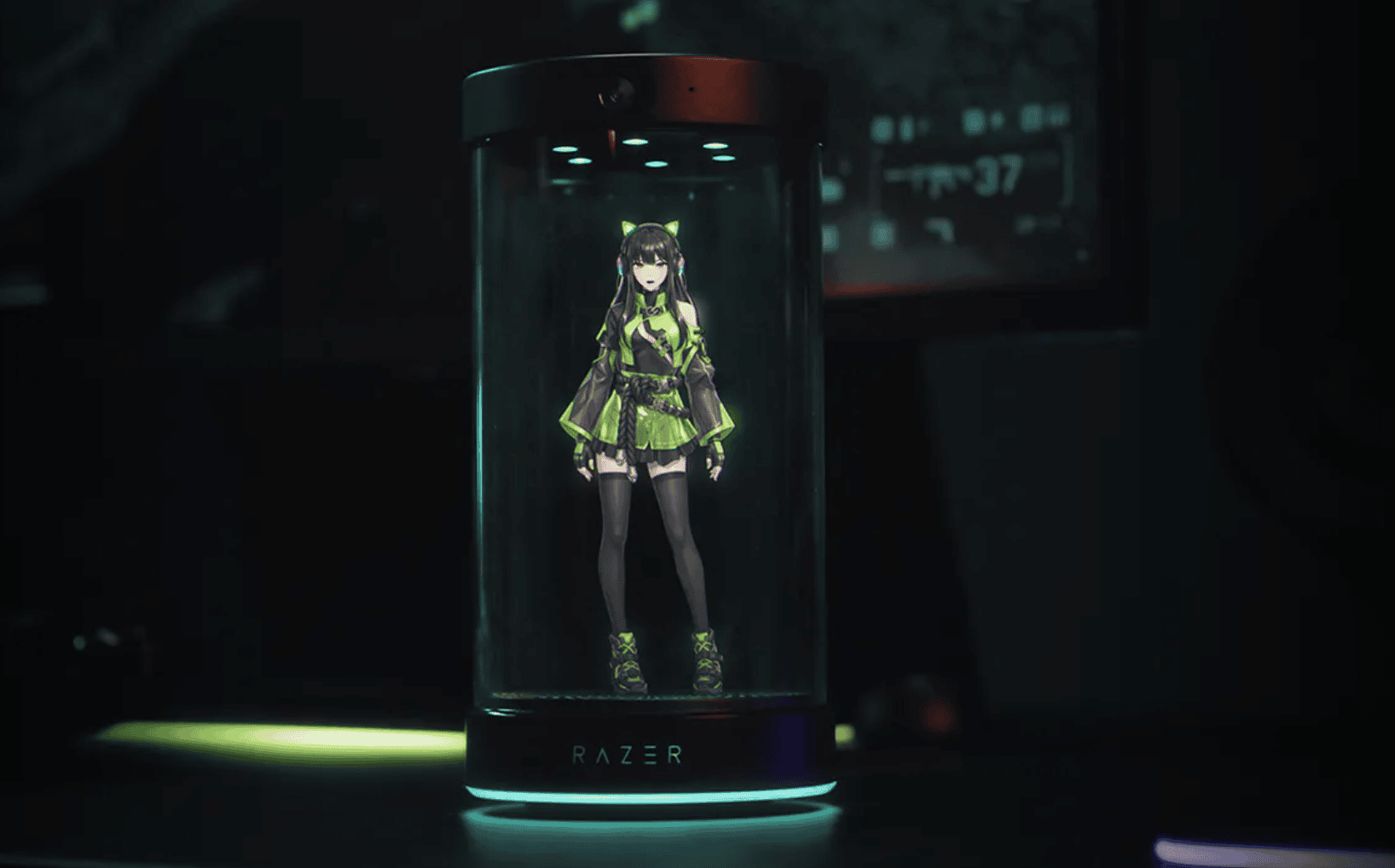
The hologram humanoids are around 14 centimeters (roughly 5.5-inches) tall, and various character styles can be chosen. Characters can also be custom-designed.
The most prominent two stock AI characters in Razer’s promotional material are Kira, an anime-style character in a very short skirt and a cat ears accessory, and Zane, a rather hunky man in a plunging shirt.
Kira is described as your “loveliest gaming AI partner that’s supportive, sharp, and always ready to level up with you”. Zane is described as, “Your steady gaming wingman”.
There’s no suggestion that the AI characters are capable of erotic or NSFW chat, or of shedding their virtual clothes, but their mildly sexualized appearances have led to questions about whether users will be acquiring them for purely platonic gaming purposes.
Or, as YouTuber Izzie Jones put it: “People are obviously going to be fucking this thing”.
Can you trust Kira and Zane?
The Razer AVA will only work with Windows PCs, and will be available as a desktop (as in computer desktop) character as well as a hologram that can be placed on your ‘other’ kind of desktop. Its AI remembers conversations, so has a ‘memory’ of sorts, and its ‘jar’ device comes equipped with an HD camera and microphone, to help it interact with you.
Considering that these hologram characters may be propped up on desks in people’s bedrooms, the issue of security relating to the camera and mic is serious. Especially when the Razer AI is marketed as being “always on”. Min-Liang Tan, Razer’s CEO, has said that “trust and safety is one of the things that pretty much all our partners really do care about”.
In 2020 it was revealed that more than 100,000 Razer users’ personal data was exposed online, allegedly due to digital records security mistakes on Razer’s part.
Is Kira “INCEL-bait”?
On the tech convention circuit, Tan has been asked about the prospect of users falling in love with Razer AVA. He has responded by saying that the device and its AI have not been designed for that purpose. Which is exactly what you’d say, and also completely beside the point; products routinely get used in ways their designers claim not to have intended.
YouTuber Jones recently made a video (see above) about Razer AVA, noting that Razer has faced criticism online about its depiction of women in its promotional videos before. Jones described Razer AVA as an “obvious INCEL-bait product”.
Razer released an April Fool’s Day video (see below) jokingly announcing that smaller AI companions would be released, to be companions for the Razer AVAs. In the joke video, a Furry character was seen as an option design for the mock companion launch.
The age of the truly ‘desktop’ AI companion?
Razer AVA won’t be the first ‘AI companion in a tube’ product to gain traction, although coming from an enormous gaming product company it will get more attention than many others. A company called SyBran has launched a similar product, the Code27, which costs from $459 and also offers mildly sexualized female anime-style AI holograms in a jar-like device.
Small initial shipments of the Code27, or ‘Codie’, have already been sold, with more in production. SyBran has raised nearly $2 million for the product via Kickstarter, and claims to have raised additional millions through other funding channels.
The Codie is marketed as offering AI characters “with soul”.
So, are we about to enter an era in which it’s the norm for AI companion chatbots to not just exist as digital avatars on phones and computer screens, but also standing on our desks?
It’s sort of the same thing, really, but there is something a little disconcerting about an “always on” character always being perched on your desk, camera and microphone ready for anything.
Support & help
If you’ve experienced image-based sexual abuse or non-consensual sharing of intimate images, help is available worldwide.
- USA — RAINN operates the 24/7 National Sexual Assault Hotline (800-656-HOPE), or visit the Cyber Civil Rights Initiative for comprehensive assistance.
- UK — Victim Support offers free help via a 24/7 helpline (0808 168 9111).
- Europe — many countries provide victim assistance through the 116 006 helpline.
- International — other resources include SaferNet (Brazil), Digital Rights Foundation (Pakistan), AWARE (Singapore), Rain Lily (Hong Kong), and KCSVRC (South Korea).
For a complete international directory, visit the Cyber Civil Rights Initiative’s international resources.
