Everyone in the dating game researches potential dates to some degree, even if it’s only a quick scroll through their Instagram. Now a new site from a data broker will dig through court records, bankruptcy filings and property history before you meet someone.
Elsewhere in the dating app world, TikTok’s short-lived live dating test got raunchy before the company paused it, and Bumble has finally dropped the rule that women message first, which hasn’t gone down well in some quarters.
All this and plenty more in our dating app news roundup.
Stud or Dud puts a data broker on your first date
Vetting dating app matches before meeting them usually involves scrolling through their social media feeds, or perhaps checking a ‘date warning’ platform like Tea or TeaOnHer.
A new site from online data broker PeopleFinders has cranked things up a notch. Stud or Dud launched on August 26, offering AI-assisted summaries of people based on public records, publicly available information and what it calls “other permitted sources”.
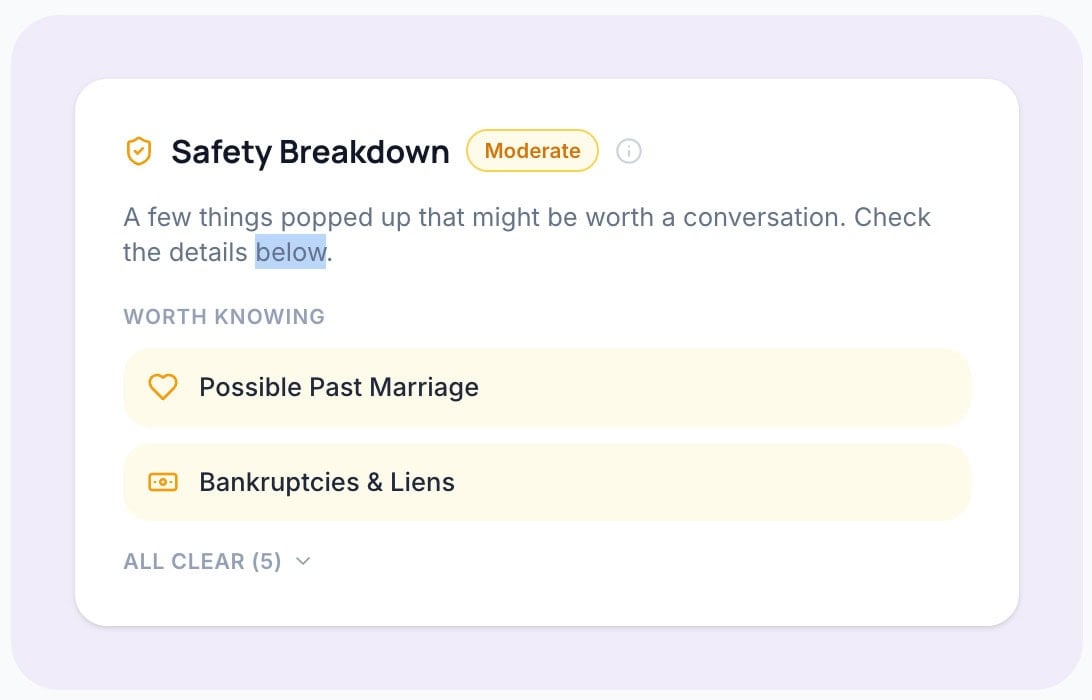
To run a check, you enter details such as the person’s name, city or phone number. The site then pulls in courthouse documents, bankruptcy filings, tax liens, social media posts and more to build a snapshot of their life. A single check costs $5, or you can subscribe for $8.97 or $19.97 per month.
The site then adds AI commentary. Stud or Dud says it “may use AI to summarize available information, identify possible patterns, and provide dating-context commentary”, and that the result “can be incomplete, mistaken, or miss important context”. The person being summarized gets no say in any of it, and no warning either: Stud or Dud does “not notify a person when they are searched”.
That’s a lot of judgment for a service whose own FAQ insists it is “not a background check, consumer report, tenant screening report, employment screening report, credit report, or safety determination”. Its scores, the FAQ adds, are “not a safety rating, compatibility score, character judgment, or recommendation to date or avoid anyone”, which sits awkwardly with a product named Stud or Dud.
PeopleFinders CEO Amber Higgins told Wired: “We provide the signals, clues, but ultimately it does not eliminate the need to take your normal precautions.”
But what if those clues are wrong? On accuracy, Higgins told Wired that “public records can be inaccurate” and that “sometimes there are mistakes”. When they are, it’s the person being searched, not the paying customer, who ends up marked a dud. Their recourse, per the FAQ, is to “submit a privacy request”.
TikTok pauses live dating after a brief, raunchy test
In other ‘what could possibly go wrong?’ news, TikTok briefly tested live dating chat rooms inside its “Hangout” section, Business Insider reported. The feature was available to a subset of users in the US and a few other markets, and invited people to join chat rooms with “great people” or “awesome people to meet”.
Some of the rooms Business Insider viewed got raunchy. A user in one livestream encouraged viewers to comment in order to vibrate a “creator’s XXL electric buttplug”, while another chat room was looking for lesbians seeking “big beautiful women”.
A TikTok spokesperson told Business Insider that the live dating option was being paused, noting that TikTok often experiments with features that may not be broadly released.
Goose’s famous face flies the nest
In our July 2026 dating appdates roundup we looked at how new gay dating app Goose appeared to be using AI-generated profiles of cute (albeit non-existent) guys to recruit users, after an investigation by Wired. Goose co-founder David Aliagas was found to have advertised for “ambassadors” to manage Instagram accounts.
Model and influencer Derek Chadwick, who launched Goose in June, has now announced that he has “stepped away” from the app. He put it down to a difference of vision:
“Where I landed is that my vision for where this should go and the direction the company is going aren’t the same thing anymore. When my name and my face are on something, I want to be able to stand behind all of it, fully. As that stopped being true, staying didn’t feel right.”
Goose still seems to be up and running, with a promo website featuring plenty of extremely attractive men, often with their shirts off.
Bumble becomes ‘yellow Tinder’
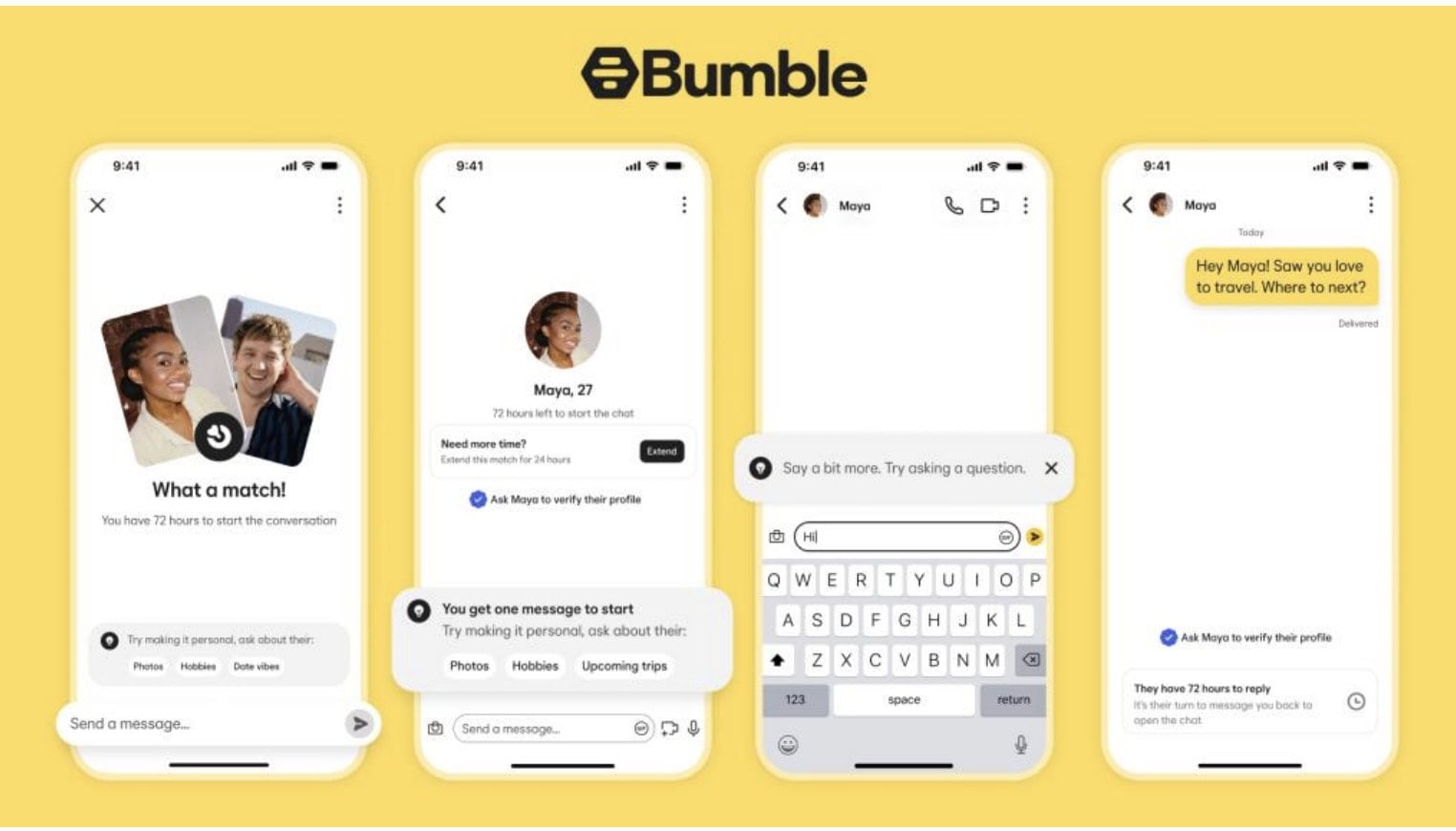
Bumble’s long-mooted move to drop the women-message-first rule that defined the dating app for so long finally arrived in August. Either person can now send the first message after matching, and matches get 72 hours to respond, up from 24.
One commenter summed up Bumble’s new selling point as “Yellow Tinder”.
In 2024 Bumble introduced Opening Moves, which let women set a question for men to answer when they match, essentially allowing men to send the first message. So this isn’t exactly the first crumbling of the women-first Bumble wall, despite the new move garnering huge media coverage.
With second-quarter revenue down 15.2 percent year over year to $210.5 million, and Bumble expecting its number of paying customers to decline again in the third quarter, the company has good reason to try something new. It’s also exploring a swipe-free future.
CEO Whitney Wolfe Herd argued that allowing men to message first wasn’t a betrayal of Bumble’s principles. “While women making the first move was a radical idea, being women-first was never about prescribing just one way to connect,” she said. “It was about designing an experience with women’s needs in mind to create better outcomes for everyone.”
The change, she said, is a realization of Bumble’s founding vision rather than a departure from it.
Hinge’s love stories get loud
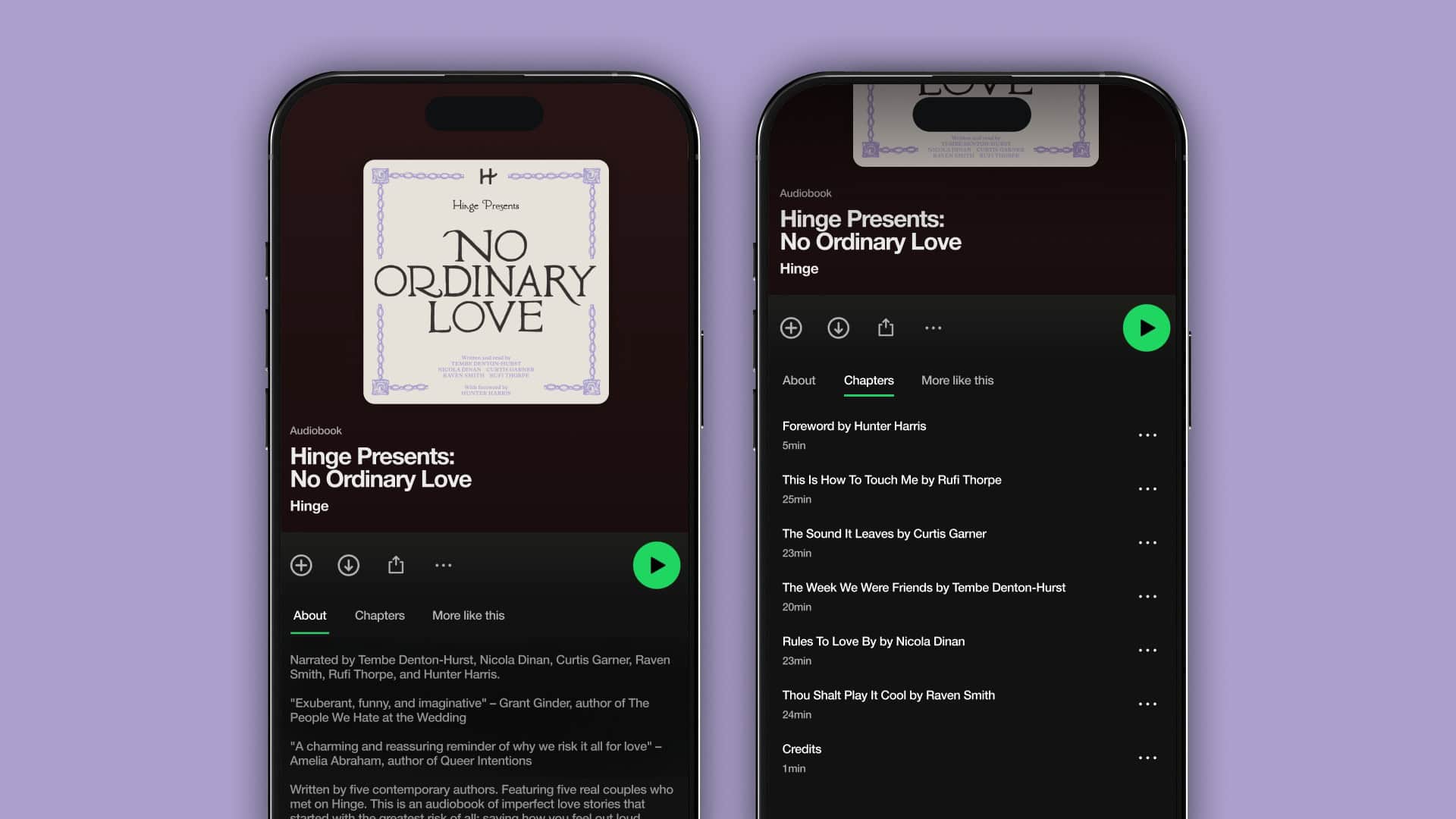
Hinge continues to market itself as an app for lasting relationships rather than hook-ups, and its latest effort is its first-ever audiobook, built from real users’ love stories.
The company paired authors Rufi Thorpe, Curtis Garner, Tembe Denton-Hurst, Nicola Dinan and Raven Smith with couples who met on Hinge, and each author wrote and narrated one couple’s story. The five stories, with a foreword by Hunter Harris, are free on platforms including Spotify, Libby and Substack.
The move fits with Hinge marketing itself around authenticity, and perhaps creative whimsy. Last year the company commissioned authors to write stories for Substack, also for its No Ordinary Love campaign.
Hinge’s own announcement offers a clue to why it keeps going longform: “Hinge continues to find inspiration in the rise of book-focused conversations on social media and how it deeply resonates with Gen Z.” Which is a roundabout way of saying Hinge would quite like to be on BookTok.
eHarmony busted over subscription terms in Australia
Dating site and app eHarmony has had its knuckles rapped in Australia, where the Federal Court found that it made misleading representations about the pricing, renewal and duration of its subscriptions, in proceedings brought by the Australian Competition and Consumer Commission (ACCC).
The court found that eHarmony advertised “free dating” when users couldn’t keep talking to anyone without paying, and sold one-month plans when the minimum sign-up was six months. Premium memberships also renewed automatically at prices up to five times higher than the initial subscription, without that being prominently disclosed, and eHarmony told users they could cancel early when they couldn’t.
Penalties and consumer redress will be decided later, but the ruling looks like a win for anyone sick of dating app subscription traps. eHarmony told Reuters it was “carefully reviewing the Federal Court’s judgment”.
Read Next: Dating appdates (Aug ’26): Overtone’s vague ‘elimination’ plan and chatfishing’s rise
