
Earlier in 2025, members of the science press received hyperbolic invitations to an event set for next year in the Chinese city of Shaoxing. They promised a “dazzling convergence of visionary scientists, renowned researchers, and revolutionary thinkers who are redefining human intimacy through cutting-edge robotics and AI”.
The invitations were for the International Conference on Love and Sex With Robots, scheduled for June 24-26 at a Shaoxing venue called the ‘High-Level Foreign Experts Innovation Center’. Organizers promised “practical demonstrations showcasing functional robotic technologies, software, or innovative interaction concepts.”

The announcement may have confused some sex robot industry-watchers and academics. An event called the Love & Sex With Robots conference has taken place in Canada since 2020 (albeit hosted online for some editions due to the Covid-19 pandemic), and a move to China had never been mentioned publicly. Was this Shaoxing event some kind of knock-off?
Despite the two conferences’ near-identical names, they are entirely separate events, although they share personnel history. The Shaoxing event stems from a split in sex robot conference leadership, involving accusations of “leftist politicization” and now a tussle over authenticity.
Trouble in sex robot paradise
The Montreal Love & Sex With Robots conference is organized with the involvement of David Levy, an AI expert and author of the 2007 book Love & Sex With Robots: The Evolution of Human-Robot Relationships.
In 2014 Levy, alongside Australian professor Adrian Cheok, held the first in a new series of events under the name International Congress on Love & Sex with Robots. That 2014 event followed a few years of smaller-scale sex robot conference gatherings, and took place at the University of Madeira in Funchal, Portugal.
The 2015 edition was scheduled for Malaysia but was cancelled, then editions took place in the UK and Belgium. In 2020, the first year the conference was hosted from Canada, members of the event’s board reportedly quit due to what Cheok claimed was “increasing leftist politicization from a small group associated with the Montreal branch”.
Cheok told SEXTECHGUIDE: “Unfortunately, they [organizers linked to the Montreal branch] sought to inject ideological and left wing partisan politics into what was always intended to be a neutral, scientific, and artistic dialogue about human-machine relationships.” Levy and the Montreal conference’s wider leadership did not respond to a request for comment on this claim.
The conference continued to be hosted in Montreal after the 2020 split, without Cheok’s involvement. The 2026 Shaoxing event marks Cheok’s attempt to reclaim ownership of the conference title.
“After several years of reflection and reorganization, this marks a rebirth of the conference in a new cultural and technological setting,” he said.
“The event is designed as a multidisciplinary forum – bringing together academic researchers, technologists, psychologists, and members of the public who have a genuine interest in love and sexuality in the age of intelligent machines,” he added.
What’s in a conference name?
David Levy told SEXTECHGUIDE that he won’t attend or support the Shaoxing event, and that the Canadian conference would again take place at University of Quebec at Montreal (UWAM) in 2026.
Levy suggested that by using a name similar to the Montreal event, the Shaoxing conference seemed to be trying to cash in on the growth of the Canadian one.
The Shaoxing event using “The original conference” as a tagline does seem provocative, or at least competitive, with regards to the Canadian event Cheok used to attend. The Shaoxing conference also describes itself as the 12th event of its kind, claiming lineage from the conferences the Canadian events and before.
Cheok told SEXTECHGUIDE that the Shaoxing event maintains “authentic lineage of the original Love & Sex With Robots conference”, and that the title has “become synonymous with the serious, interdisciplinary study of human–robot emotional and sexual interaction”.
Academics and idollators incoming
Cheok’s Shaoxing conference marks shots being fired in a battle over sex robot conference authenticity. But Cheok said that for the Chinese event, “Our philosophy is inclusive: to study human–robot intimacy not only as a technological subject but as a profound social and cultural phenomenon. Therefore, all perspectives, from academic to experiential, are welcome.”
Speakers for the Shaoxing event include Professor Ken Mogi, a neuroscientist and author who has worked on consciousness and the science of happiness.
Also announced as a speaker is Professor Zhigeng Pan, dean of the School of Artificial Intelligence at Nanjing University of Information Science and Technology, who has worked on VR topics.
Organizers say that experts and tech workers from the Massachusetts Institute of Technology, Stanford University, Tsinghua University, Tesla, Google and Alibaba will also feature. They added that the conference was “expected to host policymakers from China, the United Kingdom, and the European Union.”
Cheok said that sex robot enthusiasts known as idollators were also expected to be present in Shaoxing.
“The event is designed as a multidisciplinary forum,” he said, “bringing together academic researchers, technologists, psychologists, and members of the public who have a genuine interest in love and sexuality in the age of intelligent machines.”
Looking east
In a time when even healthcare has become a highly political topic for many, maybe we shouldn’t be too surprised that political acrimony can lead to discontent in the sex robot conference world, too.
China could, though, be considered a controversial host country for a conference where “all perspectives” are welcome. The totalitarian Chinese Communist Party (CCP) oversees a program of mass media and communications censorship in China, marking it as one of the most politically authoritarian countries in the world.
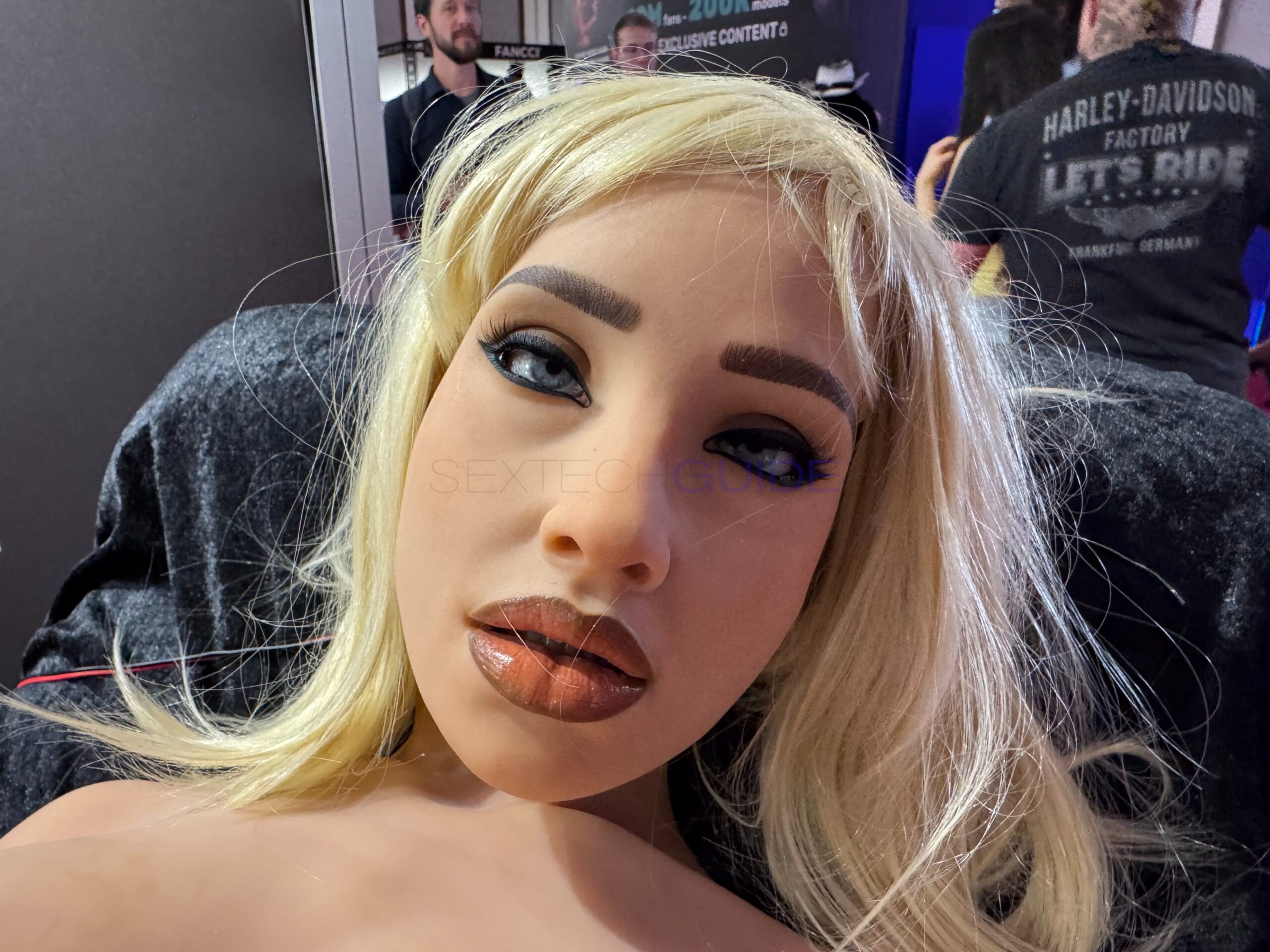
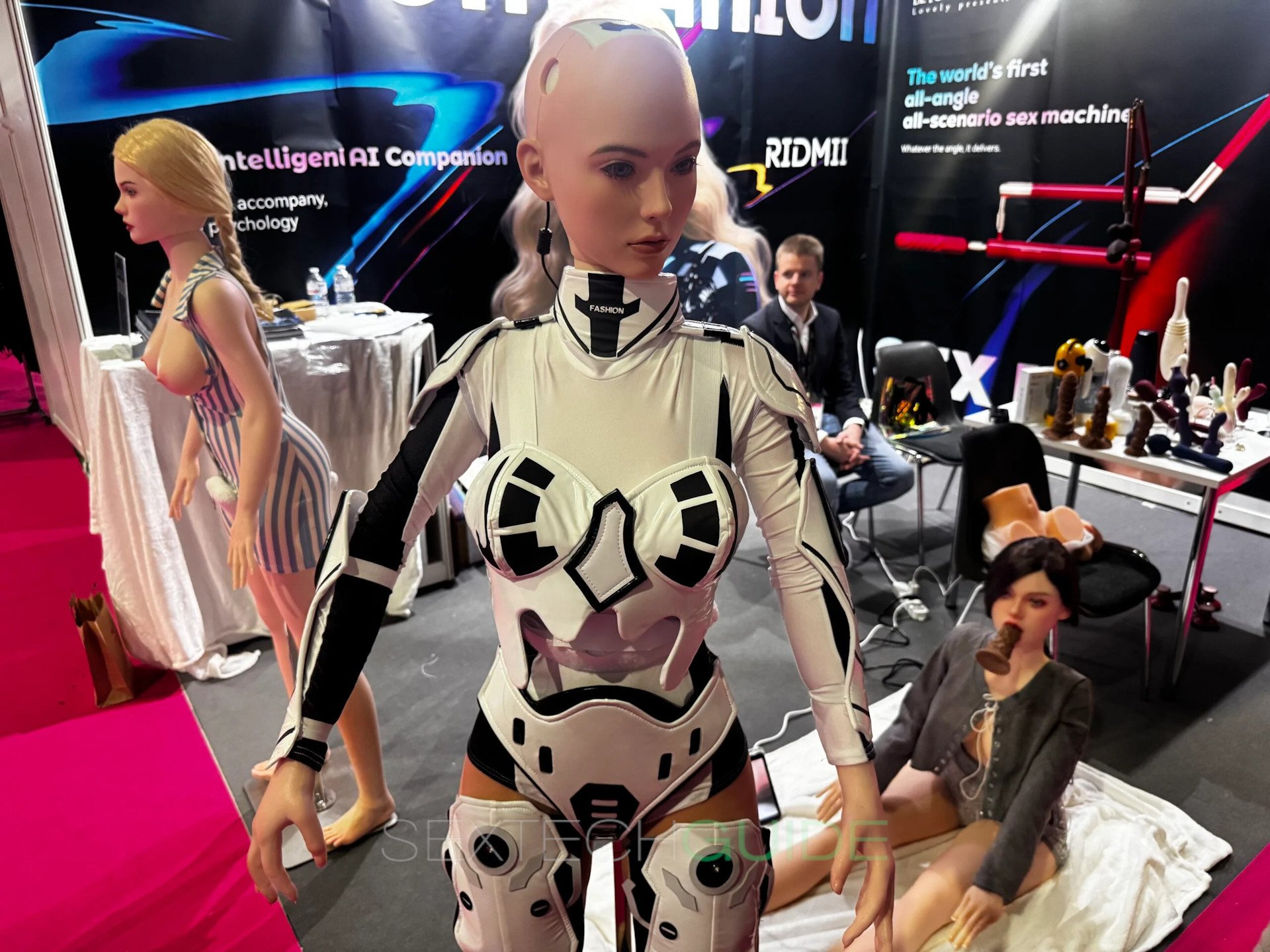
China is, however, very much a sex robot innovation and production hub. Many sex robot companies operate there, such as Ridmii and WM Doll, which sell dolls with robotic heads with conversation abilities powered by AI. US sex robot brand Realdoll (pictured above) recently told SEXTECHGUIDE that it was set to move much of its production to China.
So, we await the sex robot conference wars of summer 2026 with baited breath. Tickets for the Shaoxing conference cost $105.98, and are already on sale.










Leave a Reply