
What is Ashley Madison, if it isn’t about having an affair or a massive, earth-shattering data breach?
The notorious infidelity-assisting dating service is attempting a rebrand, dropping its “affair” terminology and marketing itself towards people who simply value privacy in relationships, whether they are single or married and after a bit on the side.
Elsewhere in the dating app world, controversy is still lingering around the Tea app in the form of a “defamation” takedown service. Bumble is rolling out yet more AI features. And a new report has highlighted how big dating app companies are really out to make money rather than spread love.
All this and more in our latest dating app news roundup.
Ashley Madison: “Where desire meets discretion”
Ashley Madison has dropped its “Life is short. Have an affair” tagline and is now marketing itself to single people as well as married cheaters.
The notorious dating site claimed that in 2025, 57 percent of the site’s new signups self-identified as being single. Ashley Madison’s new tagline is, “Where desire meets discretion”, and the company is pushing the idea that dating privacy isn’t just for those having affairs.

This doesn’t mean a huge amount of change in the way that Ashley Madison functions, as it’s more of a marketing spin than anything else. It’s an interesting pivot for a brand that for so long reveled in its embrace of infidelity, though.
The company said that the new “When desire meets discretion” tagline “embodies our evolution as a platform and our recognition that modern daters value privacy above all else”.
The company added: “Today, we’re proud to expand to a broader discreet dating platform for millions of individuals seeking privacy in their relationships. Our members are united in a desire to seek out real, discreet connections and Ashley Madison gives you a platform to search for what you’re missing.”
Paul Keable, Ashley Madison’s CSO, told Mashable: “Our pivot to discretion is recognizing and enabling daters to take control of their profiles and helping to create better connections. We will now market Ashley Madison as a dating platform for ethical discretion; whether they are single, separated, divorced, or non-monogamous.”
Ashley Madison’s fame for being pro-affair is perhaps dwarfed by the notoriety the site received when it was the subject of a catastrophic data breach in 2015, that exposed information about millions of its members.
Time for Tea takedown
Controversy around the Tea app is stirring again, with the news that an online service called Tea App Green Flags is offering to take down negative posts about men made by women on the app.
The Tea app became huge in 2025, allowing women to post information and warnings about specific men they’d dated, to help inform others. The idea was to increase dating safety and warn about potentially dodgy dudes, but concerns about privacy and defamation swirled as the app gained popularity.
Tea was removed from Apple’s App Store in late 2025 over privacy and moderation concerns, and a web version launched soon after. Now, Tea App Green Flags offers a paid “online reputation” service including the promise to attempt to take down “defamation” comments on Tea.
Tea App Green Flags started off as a service offering takedowns on ‘Are we dating the same guy?’ Facebook groups, on which women shared information about men. You can pay $1.99 to report one account to the service or a subscription fee of $19.99 a month, should you be the kind of person who needs negative comments dealt with on an ongoing basis.
A manager for Tea App Green Flags told 404 Media that it had six employees and dealt with around 50-60 enquiries each day. The service claims to have taken down thousands of posts from Tea plus platforms such as Instagram, Facebook, and even news articles.
The manager said that the idea was for the app to remove genuinely defamatory posts, not simply negative posts.
They told 404 Media: “Sometimes we find along the process that there are pedophiles or people who actually did what they did, and they’re very bad. So we say, we’re not doing this. We can’t take a rap for that. We’re ethical. We just want to take down people who are being defamed.”
Tea App Green Flags says it donates ten percent of its profits to “cyberbullying prevention charities and organizations”, that remain as-yet unnamed.
Bumble’s AI helping hands
Bumble has rolled out a series of new AI functions, as dating apps look to utilize new AI capabilities to help shore up the slowly shrinking dating app sector.
The new AI-suggested Profile Guidance gives users live feedback about how to improve their Bumble profile, as they build it. The AI could suggest making the profile more conversational or humorous, or to have more chat prompts, as a result of knowing what amount tends to attract more messages. The new function is being introduced globally.
In the US, a function called AI Photo Feedback is taking this AI guidance plan further, giving suggestions about tweaking photos on your profile and having the right mix of images.
The functions may not be enormously groundbreaking, but are another indicator of how AI chatbot functions like these are quickly becoming common in dating app functionality.
Tinder has introduced functions that allow AI to scan a user’s photos to help judge their interests and suggest better dates, and Hinge is among the apps that offers AI assistance for writing more interesting messages to matches.
Bumble is also trialling a new function called Suggest a Date in Canada. The function allows users to signal their intention to go on a real-life date in the app, which could come in handy if for whatever reason they can’t simply send a message suggesting a date.
The “subscription trap”
A dating app industry practice report by a US think tank has called for changes to industry laws to better protect users from privacy and pricing issues.
The Washington, DC-based nonprofit think tank Groundwork Collective published a report called Swipe Right to Pay: How Dating Apps Turned Love Into a Subscription Service. It noted that despite many dating apps operating largely on free models when they emerged in the 2010s, now aggressive subscription models had become the norm.
The researchers noted that Tinder now charges up to $50 to access some premium features, that Bumble’s basic subscription fee has risen hugely in terms of percentage increase since its launch in 2016, and that Hinge offers subscription offers for long-term use despite its “designed to be deleted” tagline.
The researchers wrote: “The apps that seemed to promise they would democratize dating have instead turned romance into a subscription trap, extracting maximum revenue from the people they claim to serve.”
Should we be surprised that dating app companies may actually want us to use and pay for their products more than they want us to find love? Perhaps not, but Groundwork Collective called for changes in what these companies are allowed to do.
The called for policymakers to institute basic transparency in dating app pricing and algorithms, “fundamental data privacy protections” and reasonable cancellation rights.
The researchers added: “In the game of love, dating apps reign supreme. But it’s time to stop letting them rig the match.”
Dragon swoops for non-text dating app
An emerging dating app that forgoes text messaging for voice and video calls has been successfully pitched on the UK business investment TV show Dragon’s Den, with the founder selling a stake of the app on the show.
Zaahirah Adam launched hati (the lower-case ‘h’ is the app’s own stylistic flourish) in 2025. Instead of allowing text messaging between matches, the app allows you to have a short phone call with your match. After the call, you can decide if you want to carry on interacting with the match; if you both choose ‘yes’ you can carry on and plan a second date.
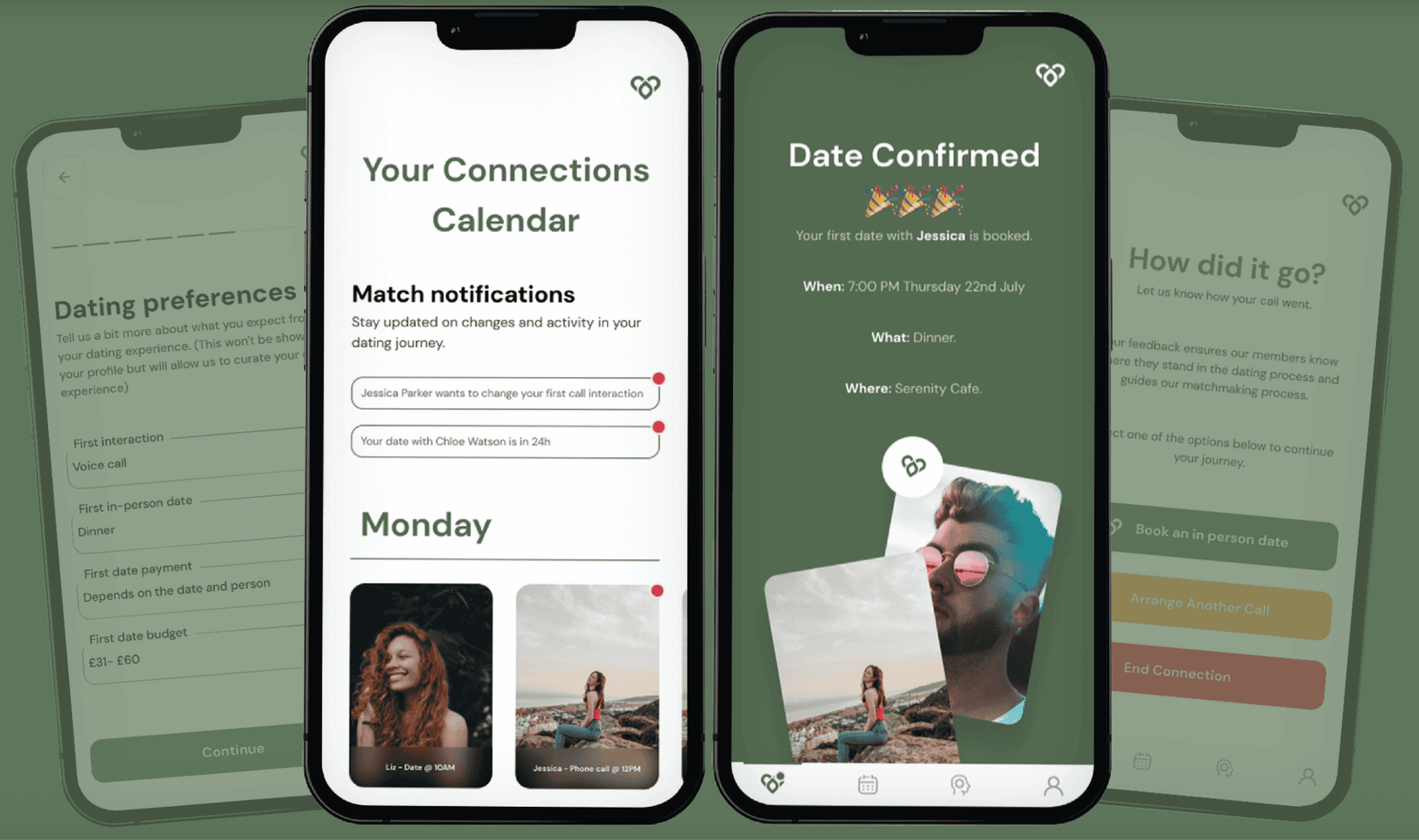
Voice messages and videos feature on profiles, rather than static images, and users must be verified by three friends, to help prevent scammers and fake profiles.
Stephen Bartlett, one of the ‘dragons’ on the investment show, gave Adam £150,000 ($200,000) for a 30 percent stake in the company. That’s not bad, considering that Adam admitted that hafi had only earned £48 ($64) in revenue so far.
Dating apps have featured on Dragon’s Den before. Once an app that matched people who have beards with people who want to stroke beards was pitched. Sadly, Bristler didn’t really take off.





























Leave a Reply